
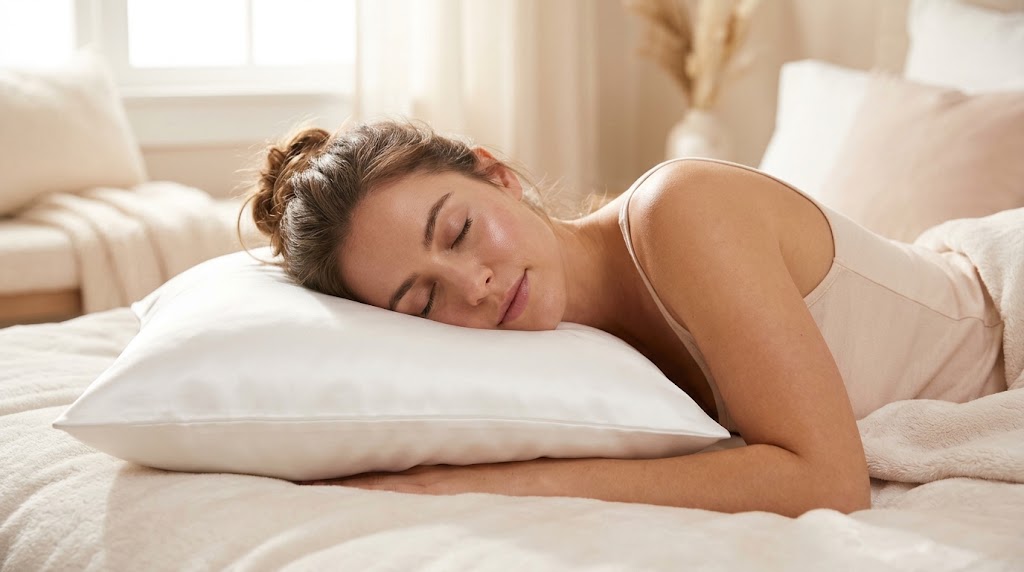
Sleep gives your skin hours of contact with the same surface. That makes the pillowcase an easy suspect when you wake up with new bumps, dry patches, facial creases, or irritation. But before you blame your products or buy a new silk pillowcase, ask a more useful question: what exactly is touching your skin, how often do you change it, and what else has changed in your routine? Your pillowcase may affect how comfortable your skin feels. Fabric texture can create friction. Sweat, oil, makeup residue, hair products, and skincare can build up on the surface. A rough or heavily fragranced detergent may also irritate sensitive skin. At the same time, there is no reason to treat your pillowcase as a miracle cure or the sole cause of acne. Breakouts and irritation can have many causes, including hormones, genetics, skincare products, hair products, medication, stress, and existing skin conditions. Here is what to know before you replace your whole bedding set.
Can a pillowcase cause acne?
There is no simple answer. A pillowcase does not automatically cause acne, and there is limited evidence that an unwashed pillowcase alone is responsible for breakouts. However, a pillowcase can collect substances that come into contact with the face, including sweat, oil, hair products, makeup, and skincare residue. For someone who is already acne-prone, using a pillowcase that feels greasy, heavily fragranced, or difficult to keep clean may be one factor worth reviewing. It is not proof that the pillowcase is the cause. The American Academy of Dermatology advises people with acne-prone skin to avoid habits that irritate the skin, such as scrubbing, using harsh products, and repeatedly touching the face. A clean, comfortable sleeping surface fits within that general approach, but it should support, not replace, an appropriate acne routine. If your breakouts continue, become painful, or leave dark marks, do not keep changing pillowcases while ignoring the wider picture. A dermatologist can help identify the actual cause and recommend treatment.
Four ways your pillowcase may affect skin comfort
1. Friction can make irritated skin feel worse
Your face moves against the pillow while you sleep. If the fabric is rough, the pillowcase is wrinkled, or you tend to sleep on one side, repeated friction may leave already-sensitive skin feeling more uncomfortable. Friction is not the same as a guaranteed cause of acne or wrinkles. It is simply a form of mechanical contact that may matter more when your skin is dry, inflamed, recently exfoliated, or recovering from irritation. If your skin feels raw or reactive, avoid rubbing it with towels, pillowcases, cleansing cloths, and clothing. Smooth the fabric, keep your sleeping surface comfortable, and focus on reducing unnecessary friction throughout your routine.
2. Residue can transfer back to your face
Your pillowcase can collect more than sleep. It may come into contact with leave-in conditioner, hair oil, styling products, body lotion, makeup, sunscreen, face cream, sweat, and natural skin oils. This does not mean every product will clog your pores or that all residue is harmful. It does mean that residue can be worth considering if you regularly apply rich hair products before bed or wake up with bumps along your hairline, cheeks, temples, or forehead. Try keeping hair products off your face, letting leave-in products dry before bed, and washing your pillowcase according to the care label. If a pattern continues, track where the bumps appear and what products touch that area. Vivian’s guide to 10 Natural, Easy and Healthy Ways to Remove Makeup may also help if makeup or sunscreen is part of your evening routine.
3. Sweat and oil may build up between washes
Some people sweat at night. Others use occlusive hair or skincare products. If you sleep hot, share a bed with a pet, or have allergies, your bedding may need more regular attention. There is no universal pillowcase-changing schedule that guarantees clear skin. Your routine depends on how much you sweat, what you apply to your hair and face, whether you have allergies, and how your skin behaves. A practical starting point is to change your pillowcase regularly and wash it correctly. If you sweat heavily, use rich hair products, or have a skin condition affected by friction or residue, you may prefer to change it more often. Do not use an overly strong detergent or fabric softener simply to make bedding smell fresh. Fragrance can irritate some people, especially when the fabric rests against the face for hours.
4. Fabric and detergent may irritate sensitive skin
Silk, satin, cotton, bamboo, and other materials feel different against the skin. A smoother fabric may reduce the sensation of dragging for some people, while a breathable cotton pillowcase may feel more comfortable for others. There is no universally best fabric for every skin type. Silk and satin are also not the same material: silk is a natural fibre, while satin describes a weave that can be made from different fibres. The label alone cannot tell you how your skin will respond. The detergent matters too. If your face becomes itchy or irritated after changing laundry products, consider whether fragrance, dyes, or fabric softener may be contributing. Switch one variable at a time so you can observe the result. If you have eczema, contact dermatitis, rosacea, or a persistent rash, ask a qualified healthcare professional about the most suitable products and fabrics for you.
Is silk better for your skin?
A silk or satin pillowcase may feel smooth and may reduce the sensation of friction for some people. It may also help hair slide more easily across the surface. Those are reasonable comfort benefits. But silk is not a skincare treatment. It does not prevent acne, reverse wrinkles, repair a damaged barrier, or make every product work better. A silk pillowcase can also collect sweat, oil, and product residue if it is not washed properly. If you want to try one, treat it as a comfort experiment rather than a cure. Keep your skincare routine stable, wash the pillowcase according to its care instructions, and observe your skin for a few weeks. If nothing changes, the pillowcase probably was not the main issue.
What about cotton?
Cotton is widely available, breathable, and easy to wash. Some people find it comfortable, while others notice more dragging or dryness depending on the weave and their skin’s condition. A high thread count does not guarantee that a fabric is right for you. What matters is how the pillowcase feels, how it is washed, whether it traps heat for you, and whether the detergent leaves a residue that irritates your face. You do not need expensive bedding to care for your skin. A clean, comfortable pillowcase that you can wash regularly may be more useful than a luxury fabric that you avoid laundering because it is difficult to maintain.
How often should you change your pillowcase?
There is no single schedule that works for everyone. A practical routine is to change and wash your pillowcase regularly, then adjust the frequency based on your skin and lifestyle. You may want to change it more frequently if you:•Sweat heavily at night.•Use oils, leave-in conditioners, or styling products near your face.•Wear makeup to bed or do not remove sunscreen thoroughly.•Have allergies or a sensitive skin condition.•Sleep with a pet on your bed.•Notice that your skin becomes more irritated after several nights on the same fabric. Wash bedding according to the care label. Use a detergent your skin tolerates, rinse thoroughly, and avoid adding fragrance products if they irritate you. The goal is not to sterilize your bedroom. The goal is to reduce avoidable residue and keep your sleeping environment comfortable.
Your pillowcase checklist
Before buying new bedding, check these five things:
1. The fabric feels comfortable
Run your hand over it. If it feels rough against your cheek, your skin may not enjoy several hours of contact with it.
2. It is not heavily fragranced
Strong fragrance may be pleasant to smell but irritating for some skin types. Consider fragrance-free laundry products if your face is itchy or reactive.
3. It is washed regularly
A smooth fabric still needs to be cleaned. A silk pillowcase is not automatically more hygienic than a cotton one.
4. Your hair products are not transferring heavily
If you use oils, gels, creams, or leave-in conditioners, keep them away from the face where possible. Tie hair back loosely if that is comfortable, and wash your pillowcase when residue builds up.
5. You are not changing five things at once
If you switch your pillowcase, cleanser, moisturizer, detergent, and hair products on the same day, you will not know what made the difference. Change one main variable at a time.
What to do if you wake up with new bumps
Start with observation rather than panic. Note where the bumps appear, whether they are itchy or painful, and what changed in the last two weeks. Review your cleanser, moisturizer, sunscreen, makeup, hair products, detergent, sleep position, and pillowcase-washing habits. Avoid scrubbing the area or adding multiple new acne products at once. Irritation can make a problem harder to understand. If the bumps are painful, spreading, intensely itchy, associated with swelling, or not improving, seek professional advice. Acne, folliculitis, contact dermatitis, rosacea, and other conditions can look similar in photographs but need different care. If your skin is already dry or reactive, revisit How to Fix a Damaged Skin Barrier After Over-Exfoliating before introducing another active product.
Your evening routine still matters more than the trend
A pillowcase can support your routine, but it cannot replace the basics. Remove makeup and sunscreen gently, use treatments thoughtfully, moisturize for comfort, and avoid products that repeatedly burn or irritate your skin. Vivian’s article on The 4-Step Evening Routine Your Cells Are Begging For breaks those steps down into a simple nighttime structure. If your skin feels tight, flaky, hot, or unusually sensitive, do not exfoliate more just because you think the pillowcase caused the problem. Read Popular Nighttime Skincare Habits That Are Secretly Damaging Your Barrier for more ways to identify avoidable irritation.
Final thoughts
Your pillowcase may affect skin comfort, but it is rarely useful to blame it for everything. Look at the full picture: fabric friction, sweat, hair products, detergent, skincare, hormones, stress, and existing skin conditions can all play a role. Start with the simplest changes. Wash your pillowcase regularly. Choose a fabric that feels comfortable. Avoid heavily fragranced laundry products if they irritate you. Keep hair products away from your face. Change one thing at a time. You do not need a luxury bedding makeover to take care of your skin. A clean, comfortable sleeping surface and a consistent evening routine are a sensible place to begin. For more practical beauty and wellness guidance, explore Vivian Amadi’s wellness articles. You can also read Why You Wake Up Looking Dull and Tired Even After 8 Hours of Sleep for more on sleep, daily habits, and tired-looking skin. If you want the nighttime steps in one place, download The Evening Reset Guide through the signup form below this article and join the Vivanique community for practical skincare, beauty, and wellness updates.
Important: This article is for general skincare education. It is not a diagnosis or individualized treatment plan. If you experience severe, painful, persistent, or worsening symptoms, speak with a qualified healthcare professional or dermatologist.